
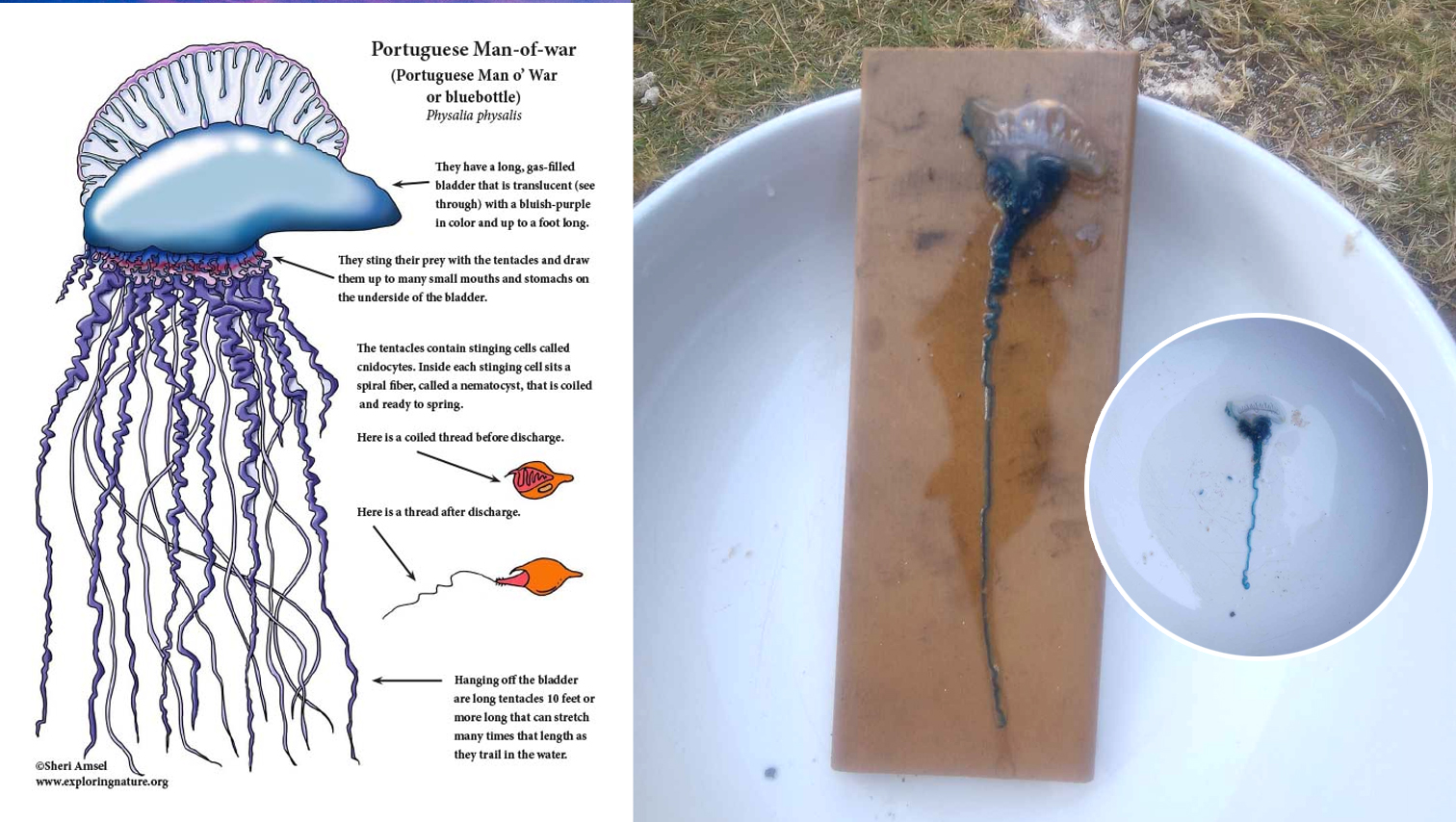
The Iligan Bay Alliance of Misamis Occidental (IBAMO) has issued an alert to the general public after a Portuguese man o’ war, a highly venomous species was found in one of the coastal areas in Plaridel town Thursday afternoon, March 21. Often mistaken as a jellyfish, the Portuguese man o’ war is a marine hydrozoan with long tentacles that can deliver painful stings resulting to severe pain, welts, and even systemic reactions in some individuals. IBAMO made the alert in its Facebook page.


IBAMO is an organization in Misamis Occidental tasked with protecting Iligan Bay, Philippines, from pollution, overfishing and overharvesting of marine resources.
Below is some info of the Portuguese man o’ war (from National Geographic).
The Portuguese man o’ war (Physalia physalis), also known as the man-of-war or bluebottle, is a marine hydrozoan found in the Atlantic Ocean and the Indian Ocean. It is considered to be the same species as the Pacific man o’ war or bluebottle, which is found mainly in the Pacific Ocean. The Portuguese man o’ war is often mistaken for a jellyfish, but it is actually a species of siphonophore, which is closely related to jellyfish.

The Portuguese man o’ war has a unique and distinctive appearance. It has a balloon-like float that can be blue, violet, or pink in color and can rise up to six inches above the water line. The float is filled with gas and helps the organism to float on the surface of the water. Below the float, there are long tentacles that can extend up to 165 feet in length. These tentacles are equipped with venomous cells called nematocysts, which are used to capture prey and defend against predators.
Encounters with Portuguese man o’ war can be dangerous for humans. Their tentacles can deliver painful stings that can cause severe pain, welts, and even systemic reactions in some individuals. It is important to exercise caution and avoid touching or swimming near Portuguese man o’ war if you encounter them in the water.


